Te Whare Hare to Pulse: A love song to a bleeding ocean – part 2

Bringing Turbulent Trajectories: Bubbles in ocean waves and seafloor curtains research and compositional ideas into the performance space with Pulse: A Love song to a bleeding ocean

Following the beautiful guest residency at Te Whare Hare, I had another fantastic opportunity to bring research ideas and materials  into collaboration, this time for a new performance work with long-time colleague Susan Bamford Caleo (performer, voice, co-creator) and Gina Gascoigne (lighting design, video projections) for Pulse: A love song to a bleeding ocean as part of Hope Punk Climate Festival, La Mama, Melbourne.

Here are some photos by Darren Gill from Pulse: A love song to a bleeding ocean, in performance:
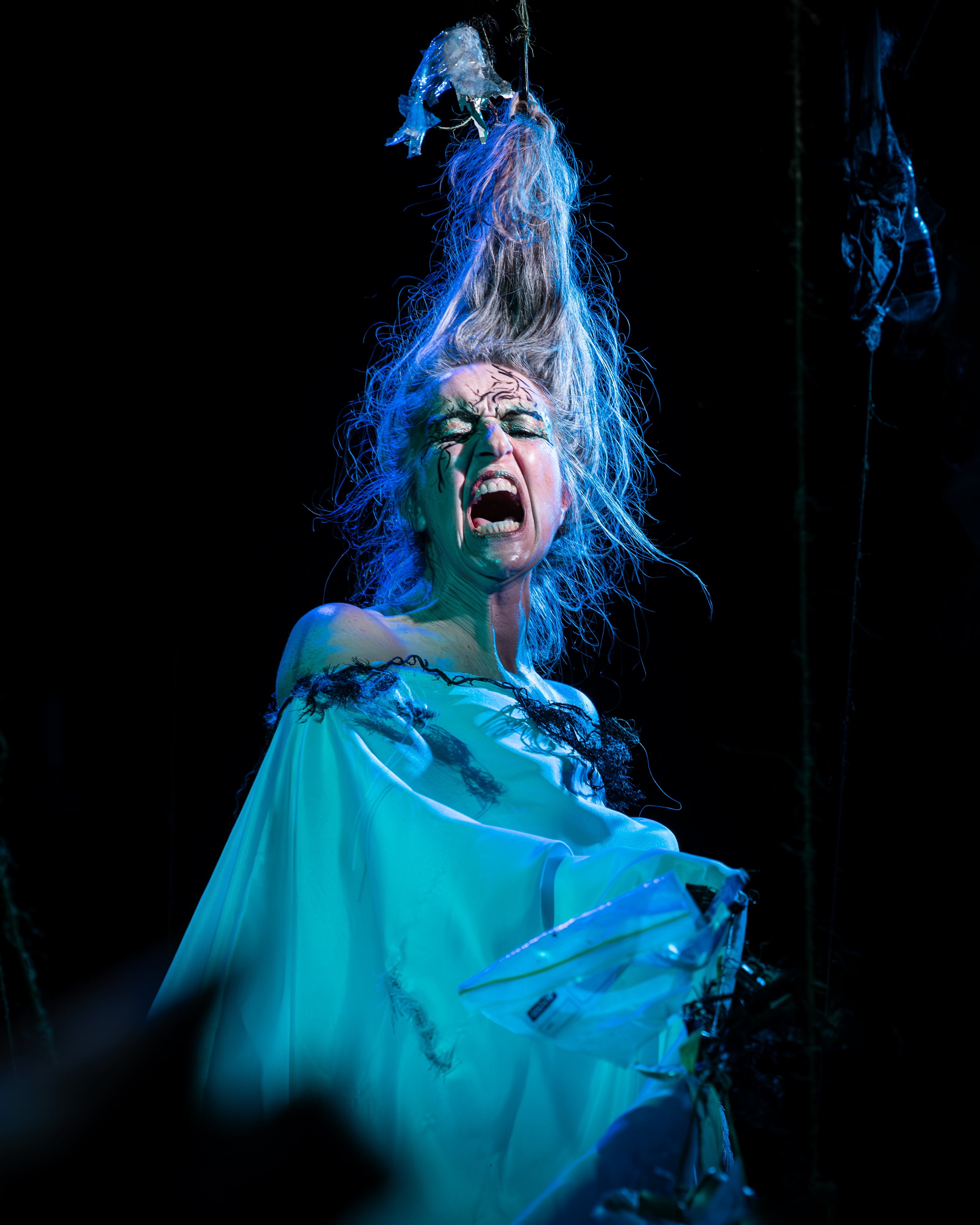
Pulse in performance,
pictured Susan Bamford Caleo, Photo by Darren Gill

The premise for Pulse, and the existing approach Susan and I share in creating new performance art works, allowed me to experiment with both extended instruments, playable found objects and vocal techniques and with my growing collection of SYNAPSE residency-based field and lab recordings in creating an immersive oceanic underwater and seabed sound world for Pulse.
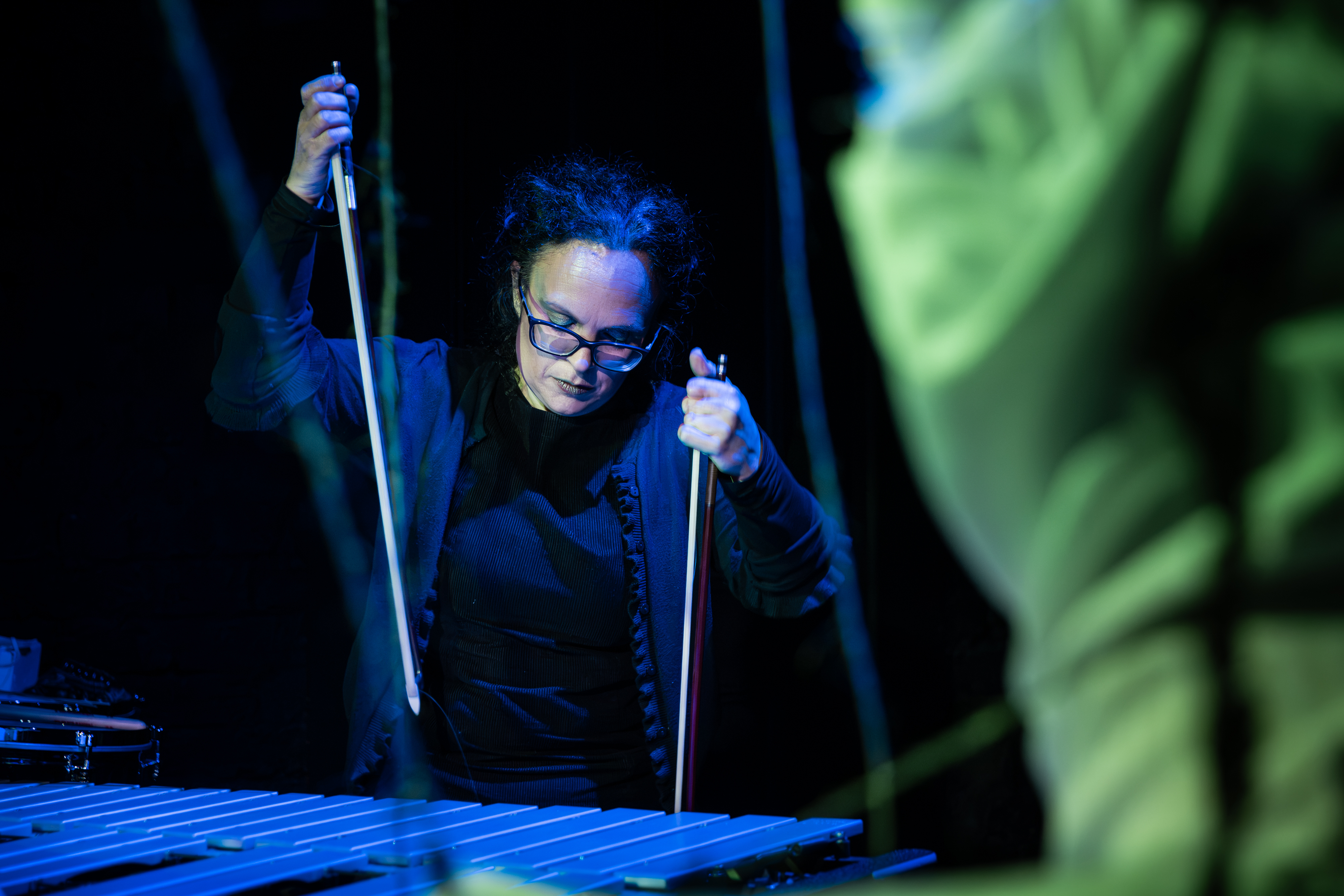
Pulse A love song to a bleeding ocean, in performance. Pictured, Elissa playing vibraphone.  Photo by Darren Gill

Both the text-based materials and the sonic, field recordings, lab recordings and Richard’s synthetic bubbles recordings feature in these compositions.


Click here for an example of the soundart works I created.
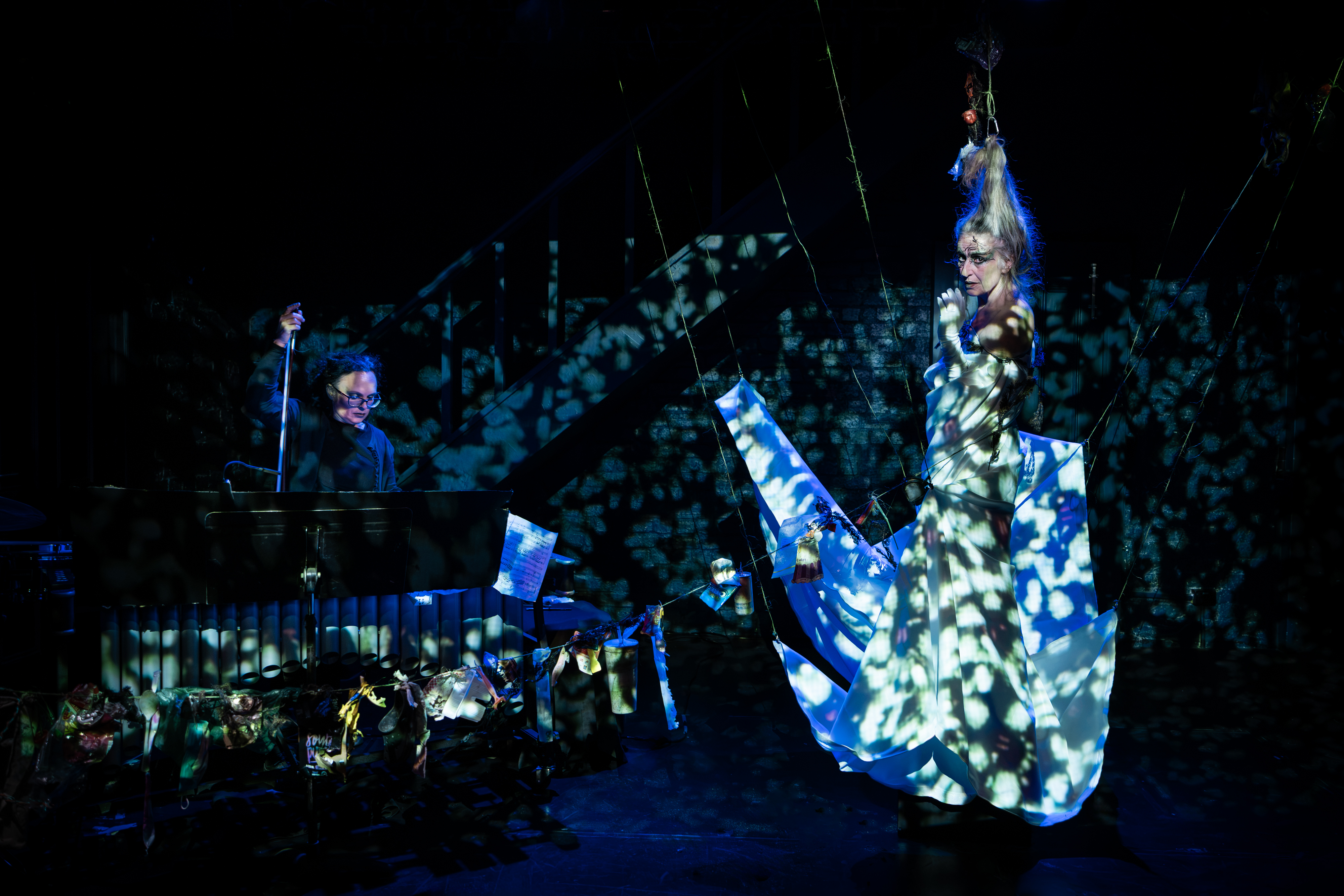
Pulse in performance.  Pictured: Susan Bamford Caleo (performer) and Elissa Goodrich (vibraphone), Lighting and projections Gina Gascoigne, Photo by Darren Gill

The opportunity to bring a 60 minute long set of sound-art and live compositions together, and to play and refine them, firstly with wonderful colleague Susan, and then to audiences in a 5-run season has been a beautiful, and energising way to move into this final 2 months of the ANAT residency.
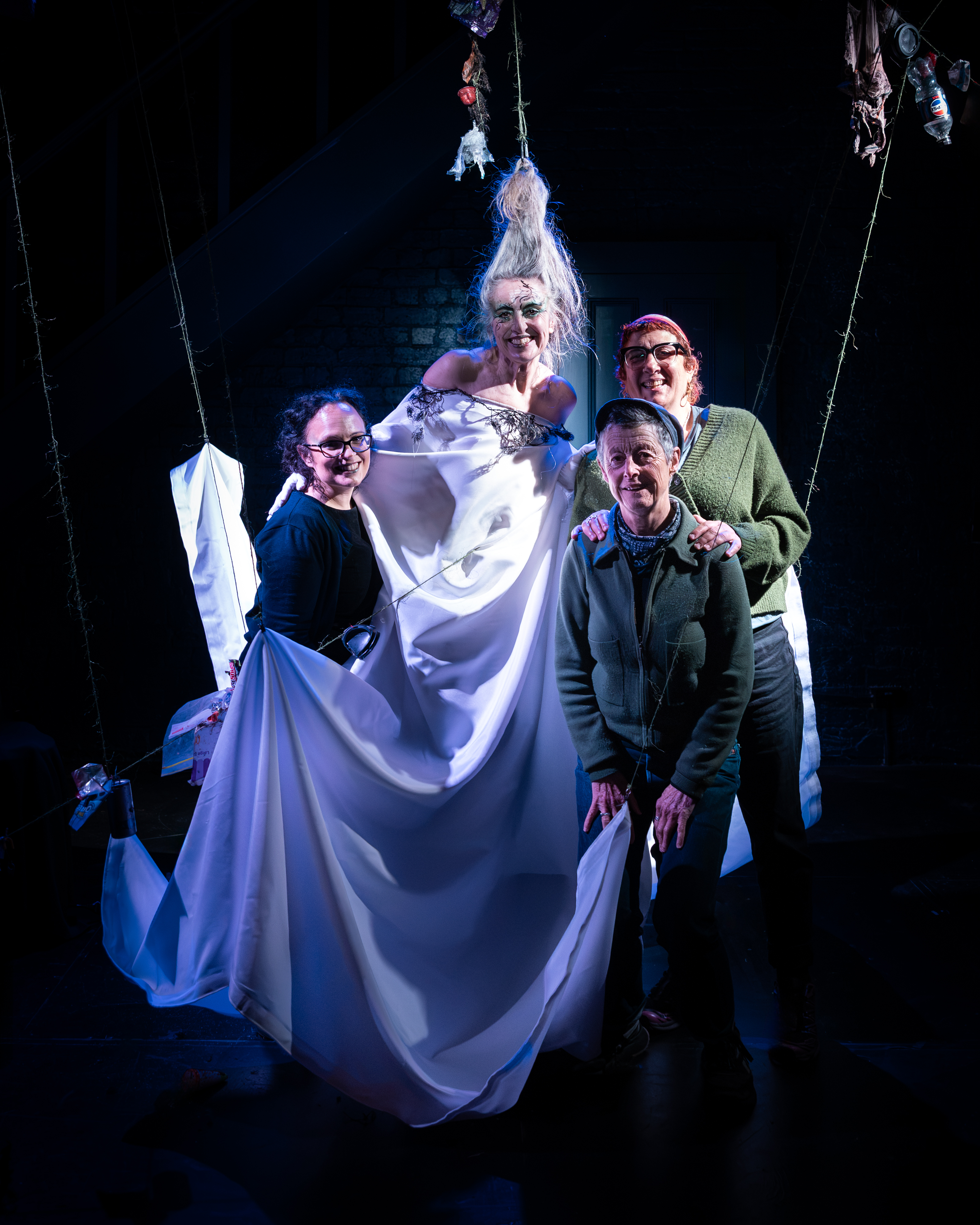
Pulse: A love song to a bleeding ocean. Pictured: left to right, Elissa, Susan, Gina Gascoigne and Stage manager/operator Melina Wylie. Photo by Darren Gill

Composing with turbulence:

I now turn towards further composition for instrumental ensemble and sound-art, with the new lab results, tests and recordings at the centre of the  composition.

The scientists’ current bubbles and waves tests and simulations have also returned us to a powerful set of terms around the phenomena turbulence. These key terms have resurfaced in recent team meetings and in my explorations with the team: Richard, Andrew, Lidong, Ali, Jen, and Shuang.

It feels especially potent and significant that these ways of describing and accounting for turbulence, and of mapping change that may or may not be predictable have re-emerged in the team’s discussions in the last few weeks.

More on Turbulence and Change, and how they speak compositionally through music in the next blog post..


Ocean residency-visit to Te Whare Hera and Pulse – part 1

Learning from Making, Learning by Collaborating

As I move in to the last 4 months of my ANAT Synapse residency,  I am turning towards further workshops and shaping my artistic responses with esteemed artistic colleagues, and workshopping 3D musical ideas with design volunteers from Swinburne.

Over the past three months, alongside my time in the Lab at Swinburne with the scientific team led by Richard, I have also been busy with very rewarding, creative collaborative guest residencies, exploring and experimenting with our ANAT Turbulent Trajectories materials as part of Dr Gabby O’Connor’s Ocean Collab Lab in Te Whare Hera (Wellington, New Zealand), and co-creating Pulse: A love song to a bleeding ocean with colleague Susan Bamford Caleo for Hope Punk Climate Festival at La Mama in Melbourne, Australia.

I’ll share more about Pulse in the next blog post “part 2″…

Bringing the Work into the Room

Both guest collaborative experiences have afforded me the opportunity to bring my ANAT residency sound-art experiments and compositional ideas ‘into the room’, and to have esteemed artistic colleagues offer their responses and interpretations to the developing body of work, offering new directions and an extended sonic vocabulary.

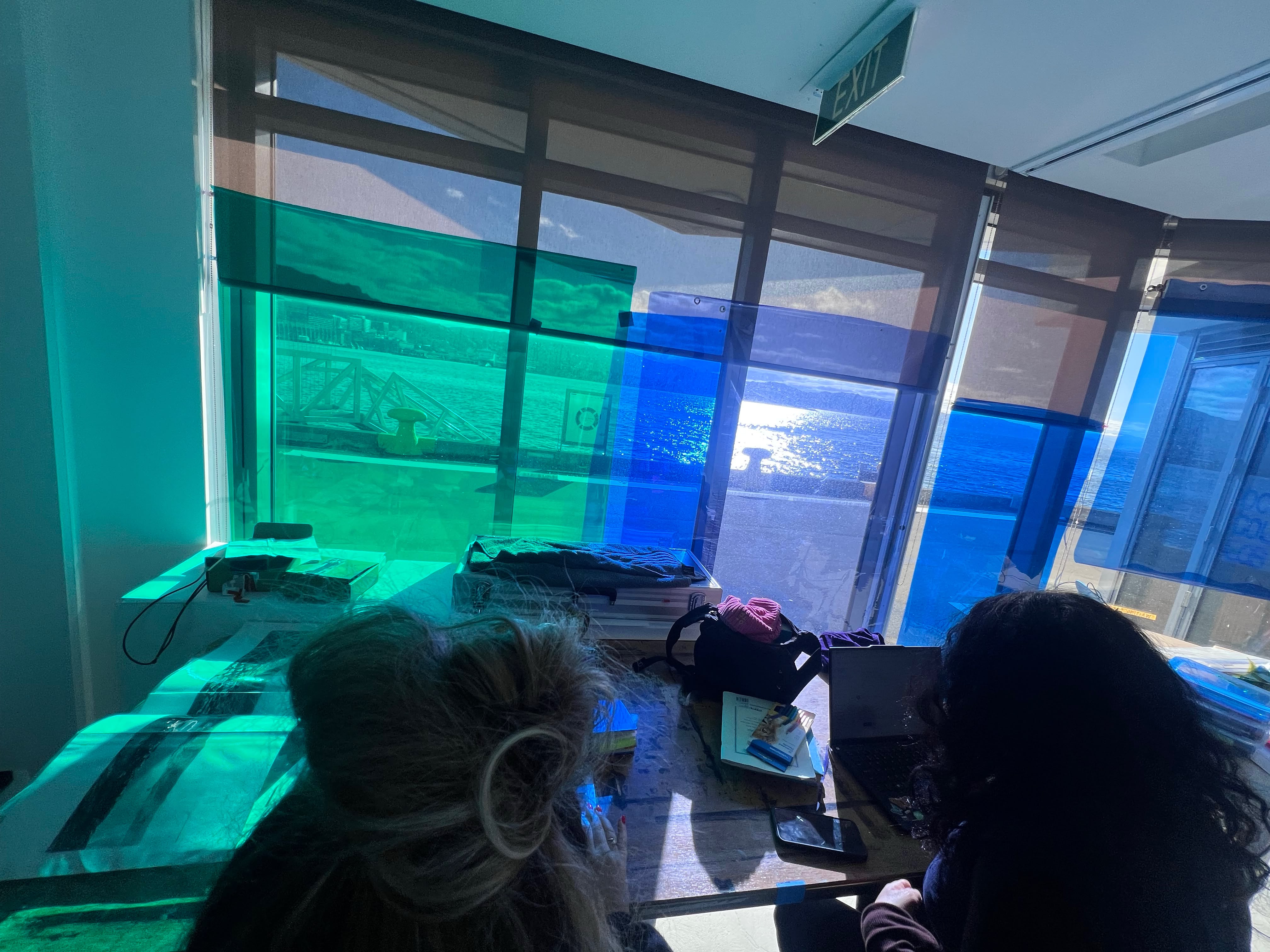
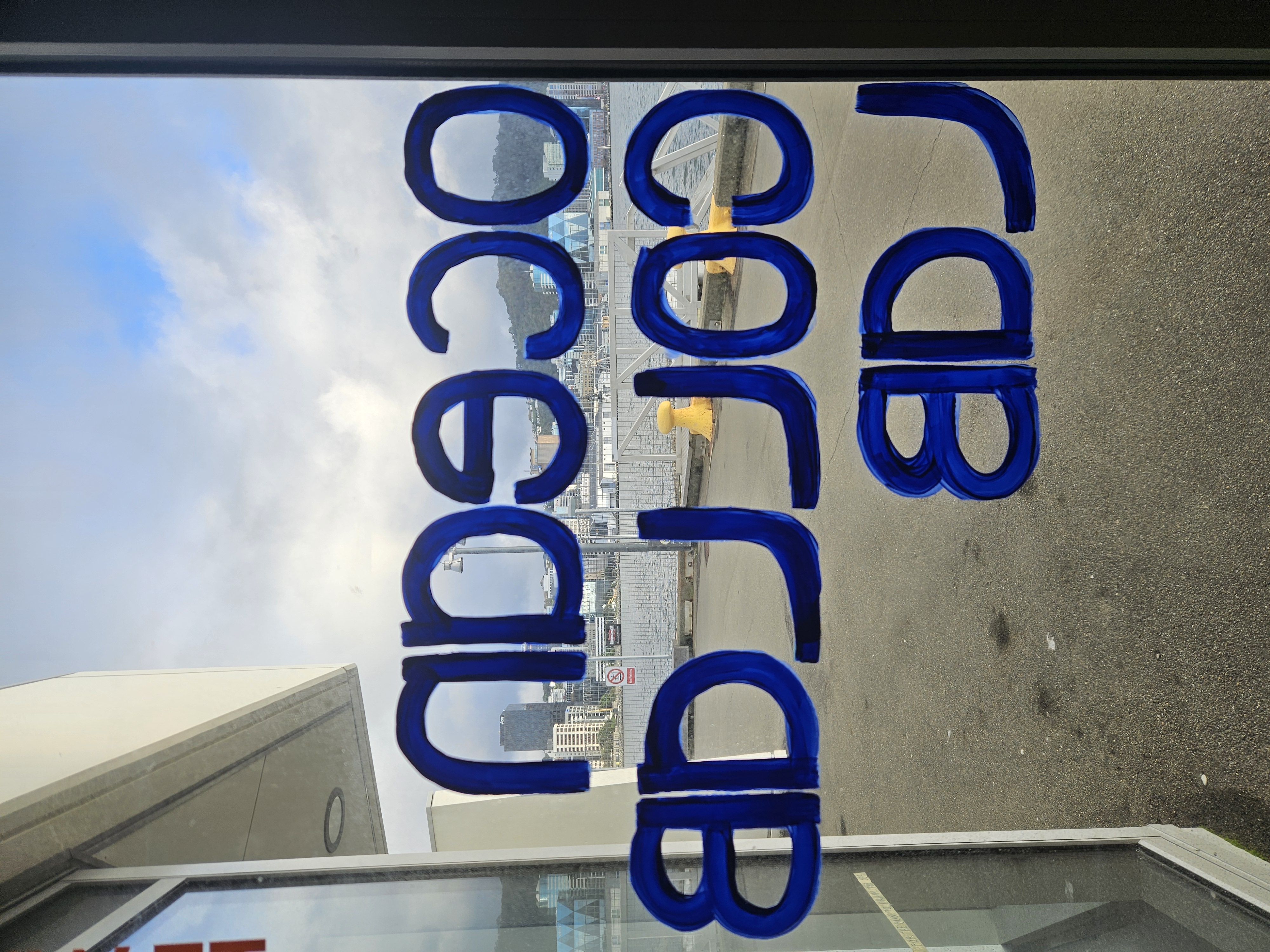
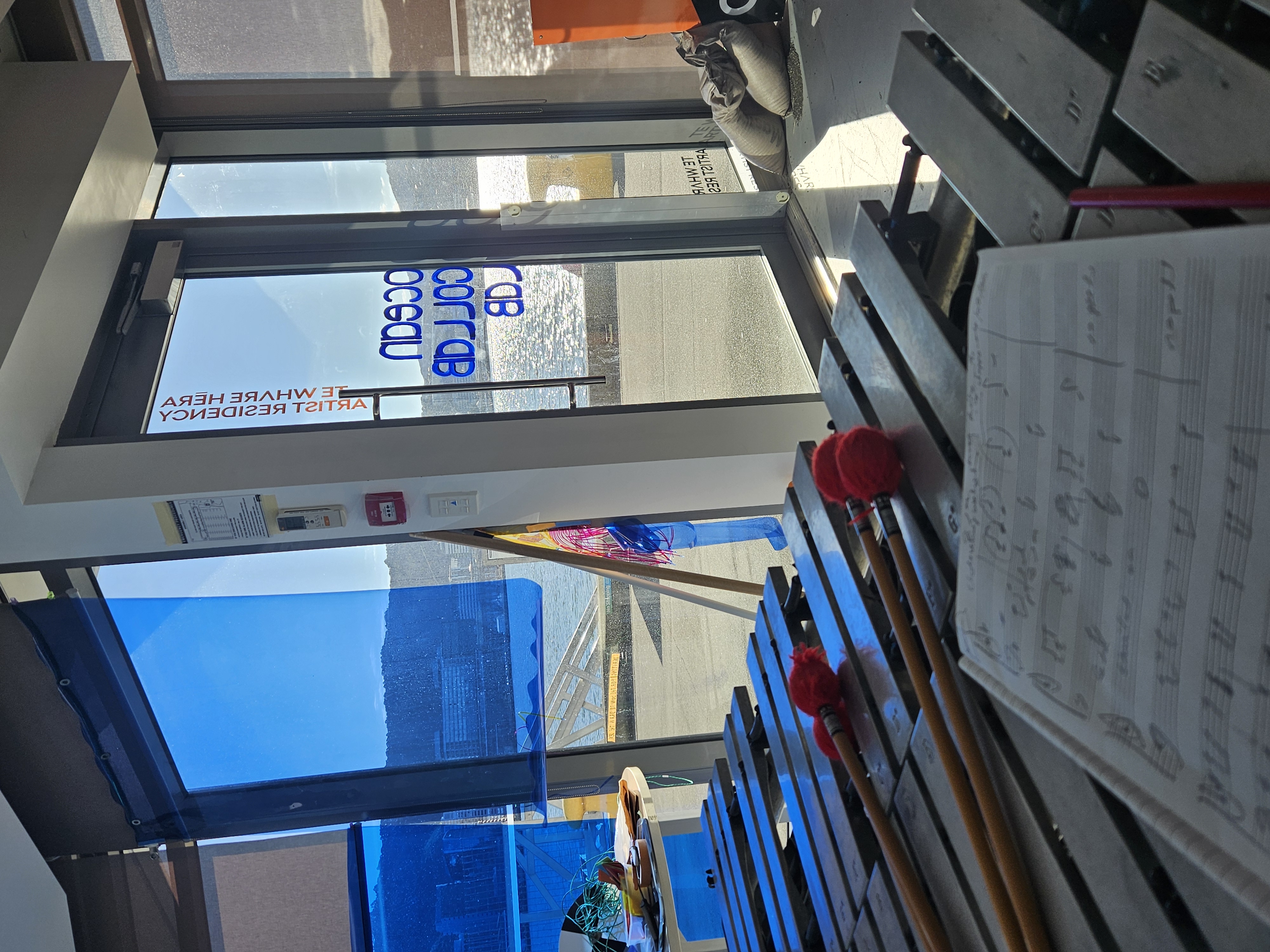
Indeed, more than bring the sound and compositional ideas ‘into the room’, at Te Whare Hera, I could play with and to the sea, its bubbles and waves! The studio directly overlooked the sea, at the very end-point of the harbour.

Over five inspiring, incredibly beautiful days,  developing compositional material for Turbulent Trajectories,  and observing how long-time colleague and friend Dr Gabby O’Connor develops visual experiences that engage audiences (children and adults) with oceans and oceanography, I absorbed her unique and deceptively simple approach.

These observations reminded me of the power of clear storytelling. For inviting audiences to create and respond to scientific information does more than encourage engagement, it deepens their knowledge of science and nature, and the power of arts. In other words, encouraging audiences to actively make and respond to scientific information doesn’t simply effect engagement, it brings actual, tactile, understanding.  Understanding of science and nature, and of how art and arts-making can seamlessly bind information to curiosity, imagination and feeling (emotion).

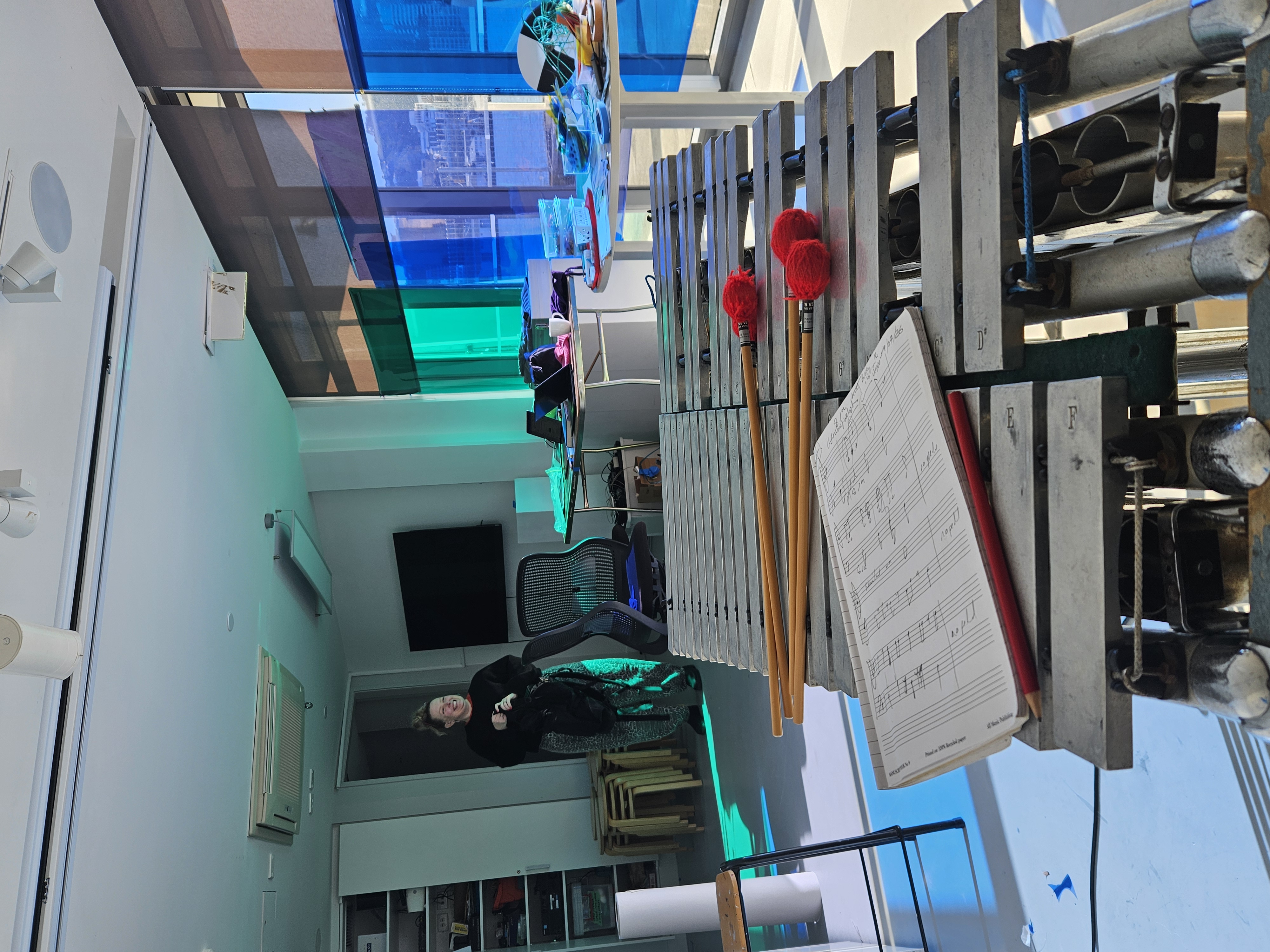
Images from my guest residency at Dr Gabby O’Connor’s Ocean Lab Collab, Te Whare Hera, Wellington, NZ

Ocean Collab Lab
Day 1 as ANAT Synapse artist in guest residence!
Inside the studio, composing to and with the ocean

Composing, Gabby in the distance

Gabby O’Connor and Elissa Goodrich, working side by side in the studio

A huge thankyou to Gabby, Tim and Martin for providing a vibraphone and recording equipment for the week at Te Whare Hera!