I feel compelled to begin this latest blog with these stark statistics published by the UN for World Ocean Day last week:
“52.1 million tonnes of plastic a year enter the ocean, contributing to the 24.4 trillion microplastic particles that impact more than 4,000 marine species.
[And] … sea levels continue to rise at an increasing rate, from 2mm a year prior to 2015 to 4.3mm a year in 2023. ”
These rates of change and quantities of plastics are almost impossible to grasp without visual or aural representations.
According to the UN the number of microplastic particles in the oceans now outnumber the number of stars in the galaxy.
This leads me to wonder what these changes might mean for bubbles in ocean waves.
In quite a different scale (or realm), I have been exploring the Fluid Dynamics team’s employment of ‘dimensionless’ numbers to create simulations and to define ratios – In our case, when applied to bubbles rising within calm and turbulent water.
Meeting our dimensionless numbers or ‘players’:
Galileo (‘supporting role’) – can indicate how freely something in fluid can move.
Reynolds (‘lead role’) – can predict the quality and type of fluid flow (of turbulence or calm waters), and as Richard reminded me, “by far the most important of the dimensionless numbers”.
Bond (‘supporting role’) – can predict the level of buoyancy and the influence of gravity in relation to surface tension.
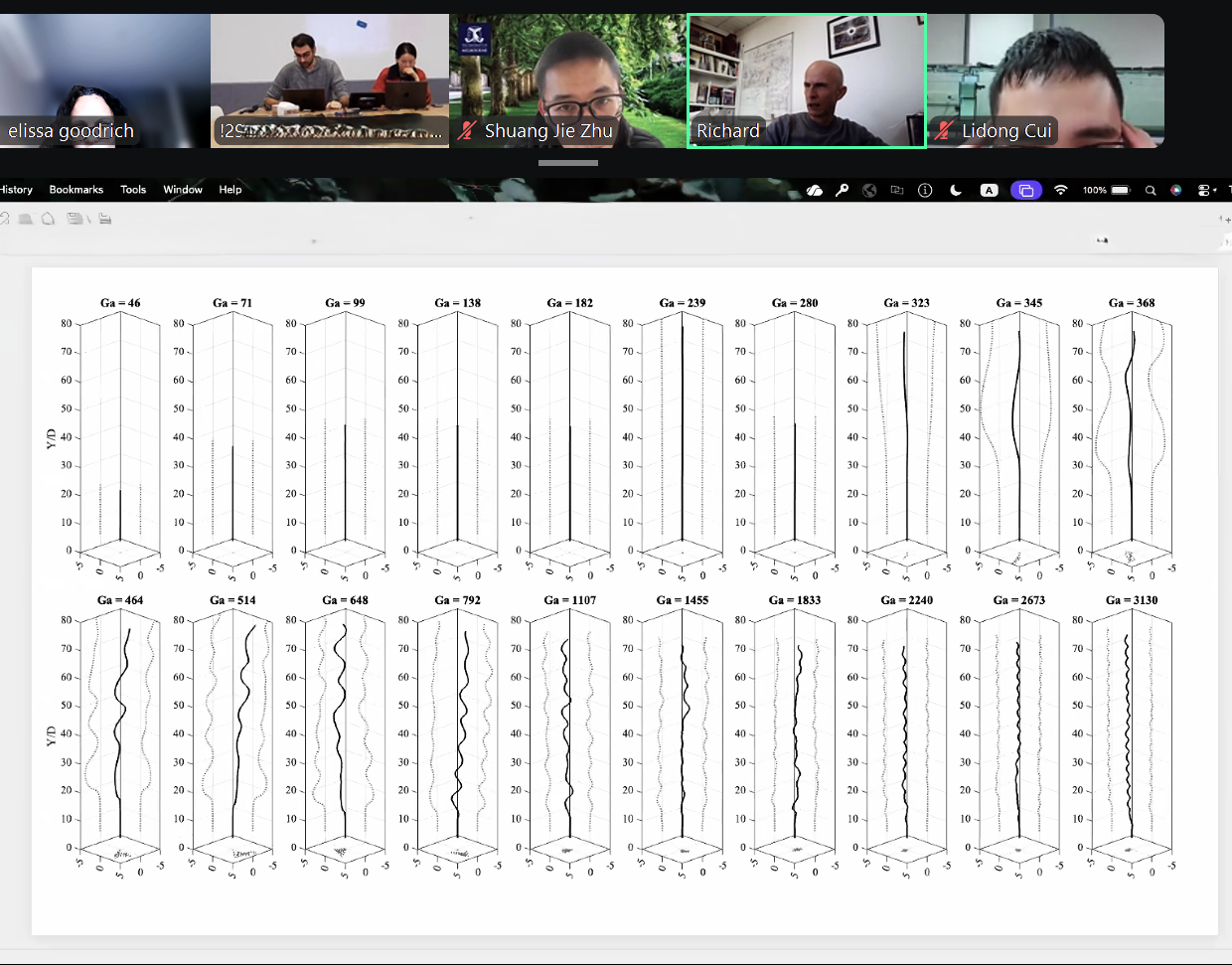
And a sneaky screen shot of some of the Fluid Dynamics team!
I find both the concept and the actuality deeply poetic, ephemeral. It feels like these ‘numbers’ are free, mercurial and yet their power is in resolving the unknown – akin to music and how it invisibly moves through the air and affects us.
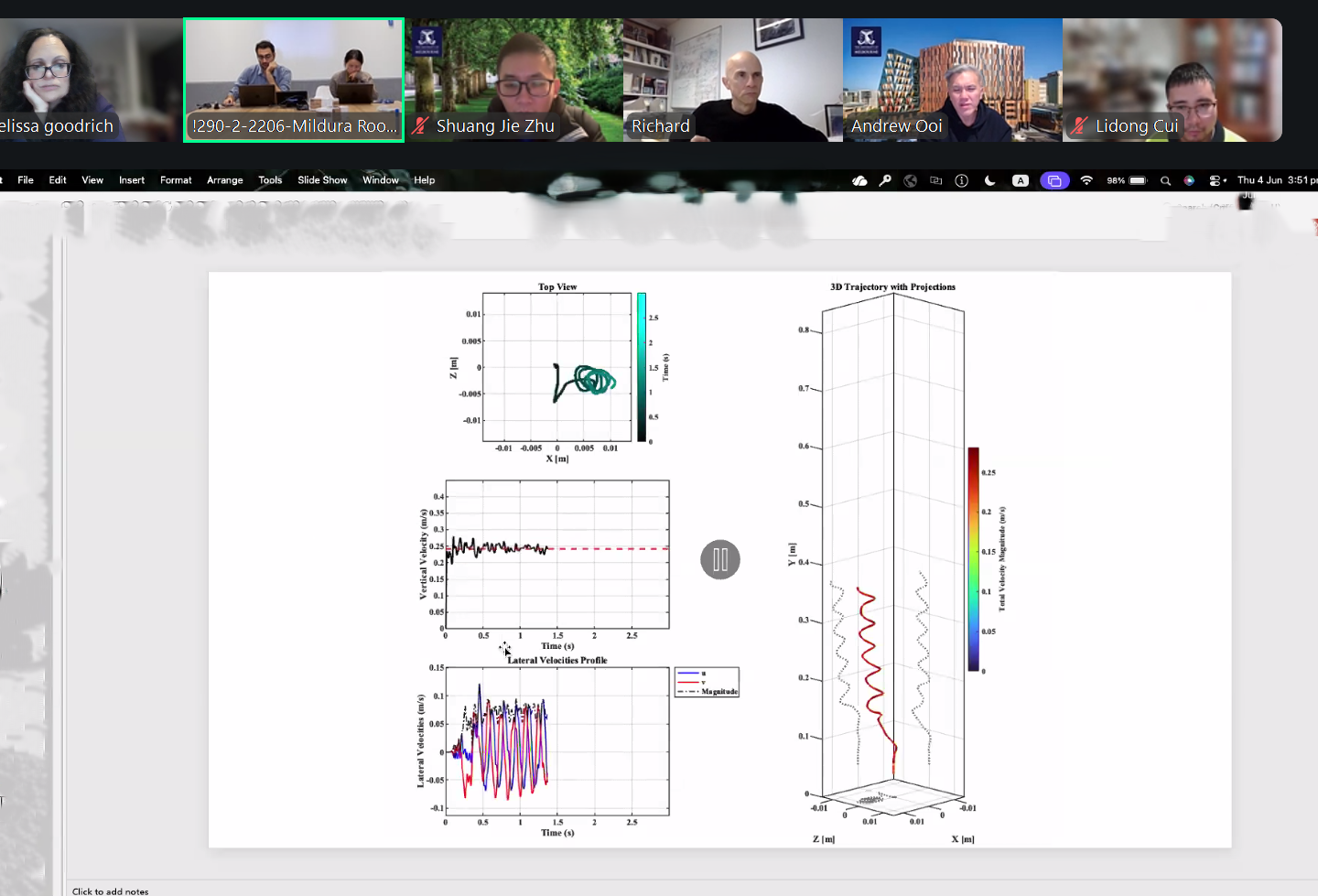
And more of the Fluid Dynamics team in screenshot!
With the Melbourne launch of Gene Tree, our previous science/art music project, now complete, I have begun developing musical ideas around bubbles and dimensionless-number “players” in calm and turbulent waters.
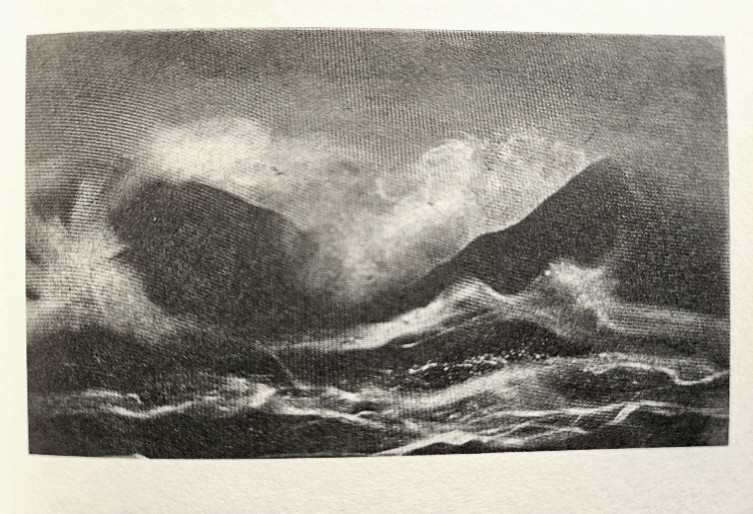
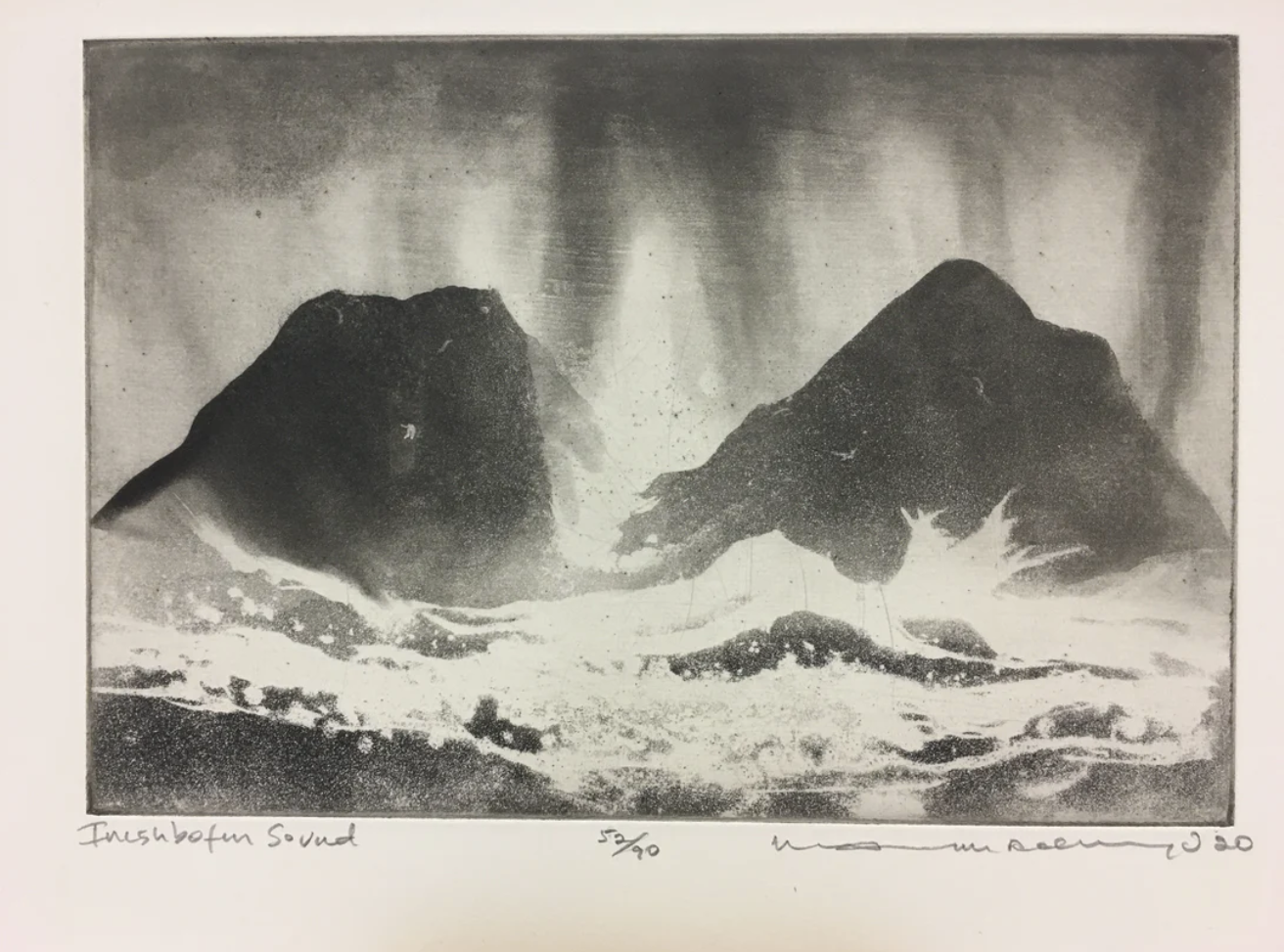
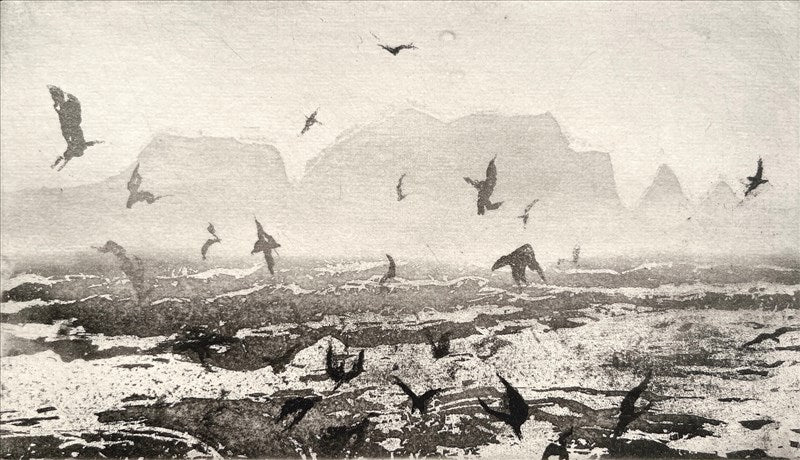
This work is also currently inspired by Leonardo’s sketches of water and bubbles and Norman Ackroyd’s evocative black-and-white seascape prints and watercolours.
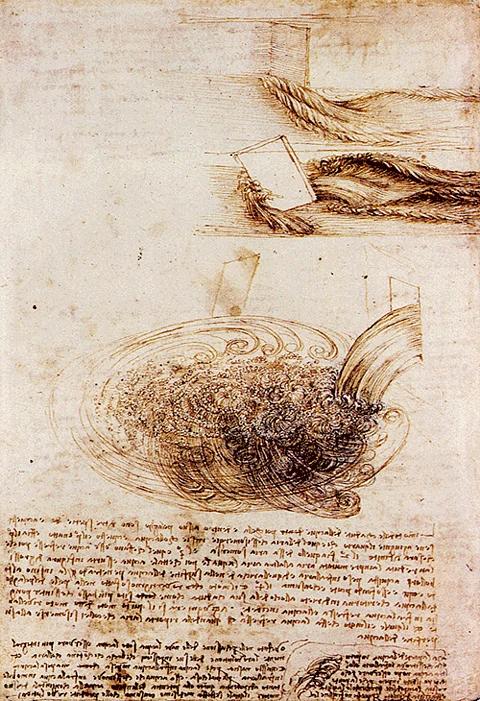
Norman Ackroyd: Series of images – presented here for private research purposes only
I am creating a series of short sound-art experiments using Richard’s synthetic reproductions of bubble sound emissions alongside ocean field recordings, as well as initial compositional sketches.
Together, these elements form an initial creative experiment in translating the science of bubbles in turbulent motion and its applications into music for an improvising quartet.