Bubble rising experiments and modelling: a question of questions

Interdependent Duets

Bubbles rising – experiments and modelling:  a question of questions

There is such an abundance of creative inspiration from the various ways of observing and attempting to simulate bubbles rising.

These last few weeks (and continuing!) I have been observing the Fluid Dynamics team working on lab experiments (from Swinburne) and simulations modelings (from University of Melbourne).

In these weekly combined zoom meetings and by observing the fluid dynamics engineers’ work in the laboratory and in computer modelling of simulations, it has become apparent that whilst each team are of course interested in the entire process, those engaged in the laboratory experiments are particularly focussed upon ‘why’, and those engaged in creating and trialling simulation modelling are particularly focussed on ‘how’.

This week Richard introduced me to Leonardo’s Paradox – a 500-year-old point of inspiration in relation to bubble trajectories, in which art, nature and science meet by observing and asking how and why.

500 years ago, Leonardo da Vinci noticed that whilst tiny bubbles rise in a straight line, sufficiently large air bubbles, rising in bodies of water, periodically diverge from a straight line into zigzagging or spiralling trajectories.
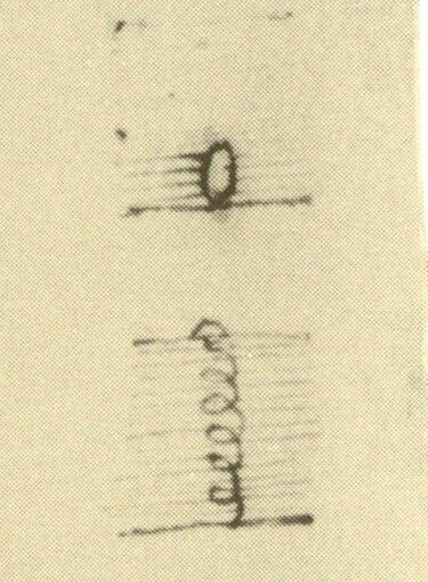
Leonardo da Vinci’s bubble illustration from his Codex  Leicester, c.1506 -1512


Moreover, when a bubble gets bigger than a certain size, it becomes unstable. This makes it tilt and change shape. This change, in turn, increases the velocity of water around the surface of the bubble, which creates a wobble motion. The bubble then returns to its original position because of the pressure imbalance created by the deformations (or wobbles) in its curved shape, and this cycle repeats.

It is a fascinating and very dynamic repeating process of movement and change, in which water and the bubble itself, its changing surface, and surface tension are in a kind of interdependent duet.

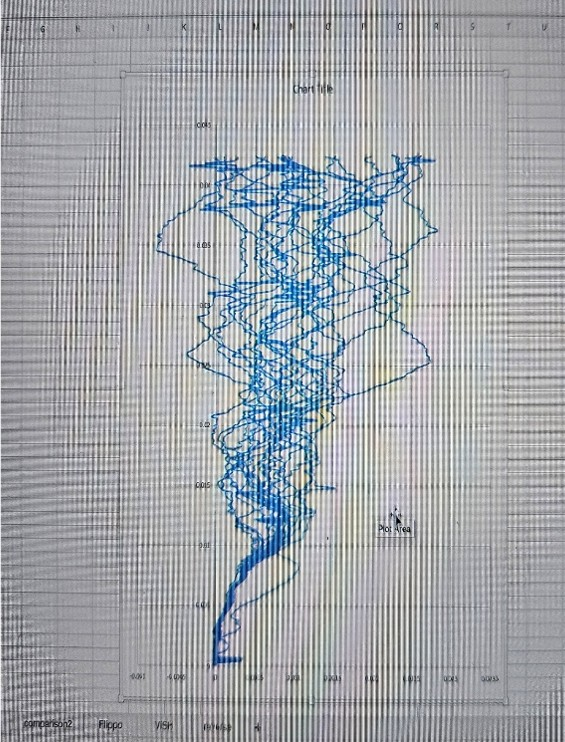
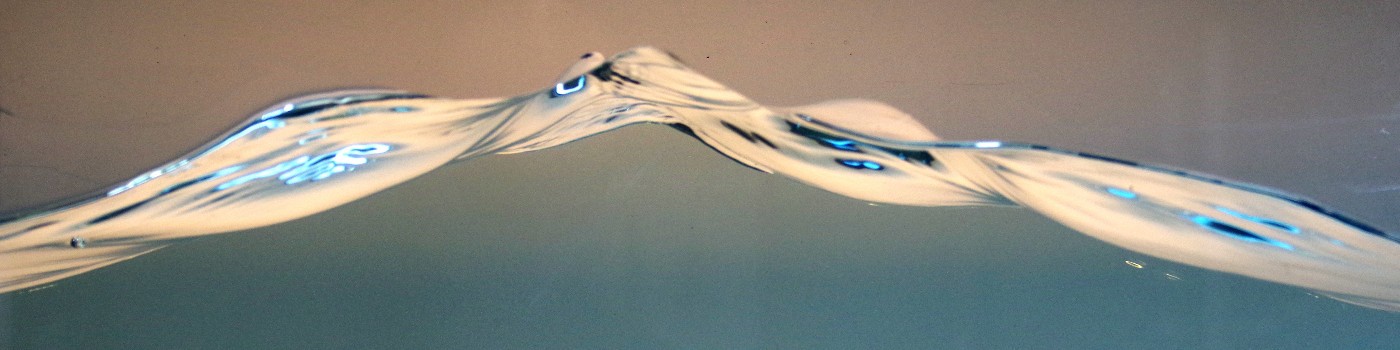
There is something wonderful and wonderous about seeing da Vinci’s 500-year old scientific sketch alongside the laboratory-experiment photography and graphic tracings, and the trial bubble trajectory simulations…

Musical ideas and notations are emerging!


Examples of work from the lab, and from the modelling:
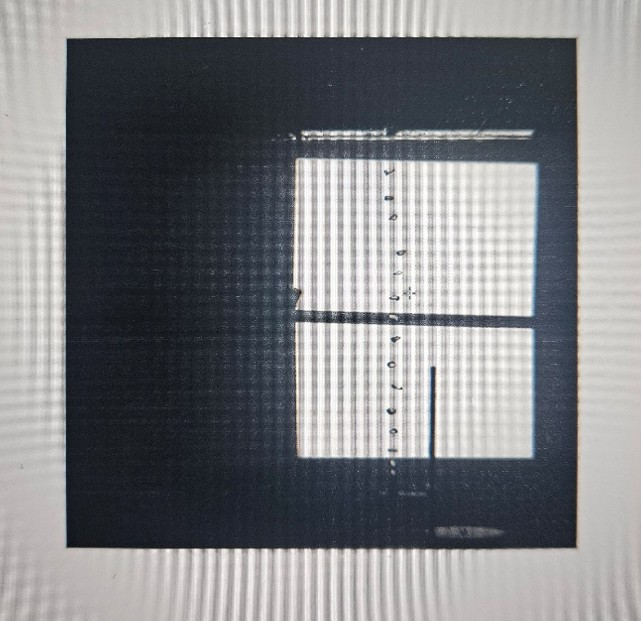
Image: Laboratory documentation by Lidong Cui from ‘Bubbles Clouds in Ocean Waves’, Swinburne University of Technology
Image: Trial simulation documentation by Ali Heshmati from ‘Bubbles Clouds in Ocean Waves’, University of Melbourne.


First entry for Turbulent Trajectories: deep listening

Photo courtesy of Filippo Nelli and Richard Manasseh 2025

Hello,

We begin, with a first entry for 2026 ANAT Synapse Artist Residency,

I commenced the residency 2 days ago with colleague Professor Richard Manasseh from Swinburne University of Technology and his team.

It has been an opportunity to reflect upon our past project  (2019 – 2024) and the dialogue we share.  With  Melissa deLaney, Carollyn Kavanagh and Jenn Brazier opening up a discussion about how arts and science feed each other, and encouraging Richard and me to articulate our experience of this.

I find it is about curiosity, care, and an openness to how nature, science and arts intersect, overlap, as well as recognising how distinct they can be.  A kind of optimism and trust and listening, deep listening…

So, with the wonderful prompts from the ANAT team,

I begin by reviewing my understanding of bubbles from my earlier project with Richard and his team.

As an example of the way in which art can not just reinterpret but also reframe science and play with existing forms and patterns from both disciplines, here is

‘The life-cycle of a bubble’ 

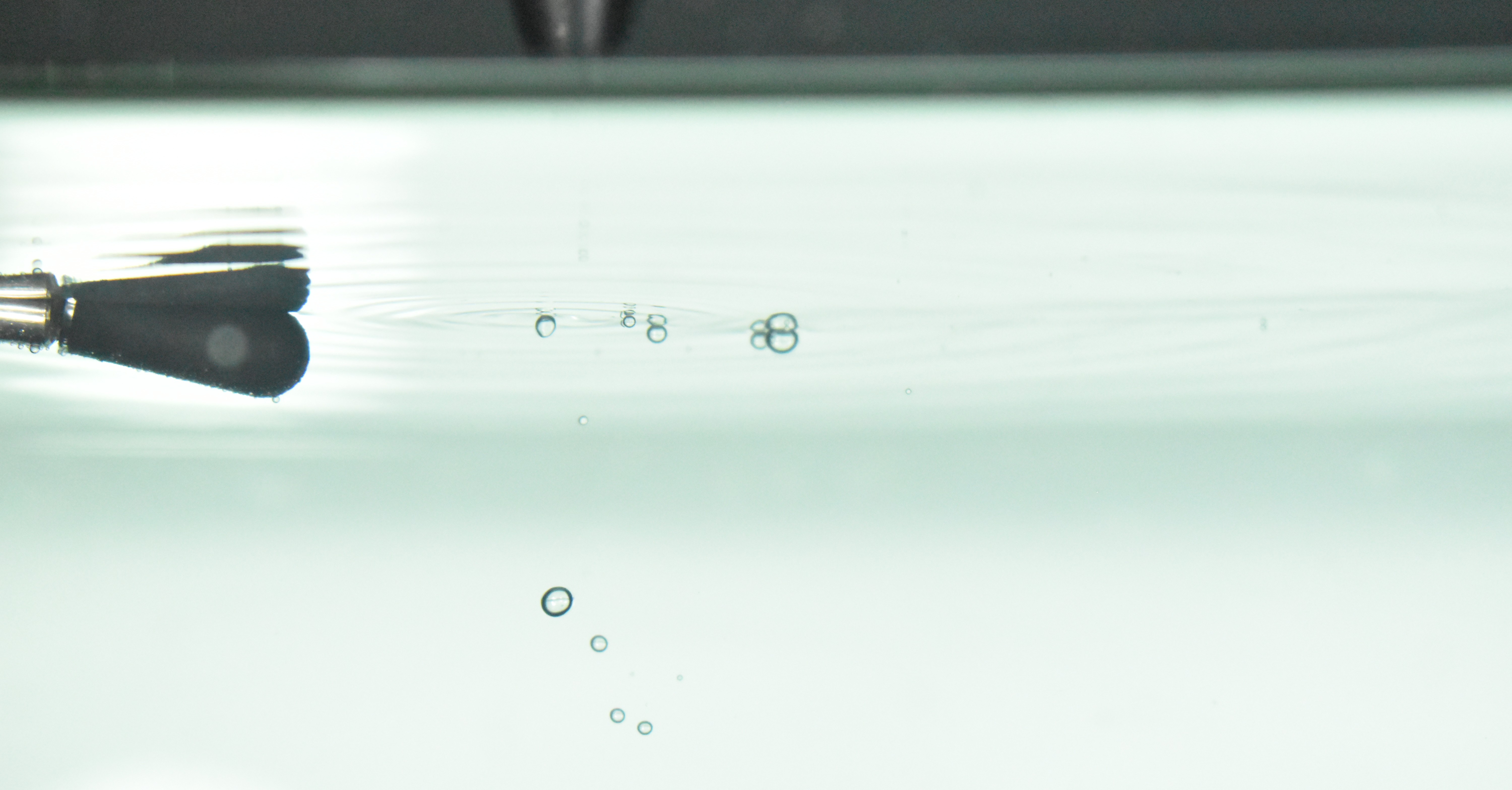
Individual bubbles rising to teh water's surface within a tank. the hydrohphone is to the ledt of teh bubble, submerged in the water.
Recording bubbles in the lab, Photo by Filippo Nelli
It came about as video artist, long-time colleague Michael Carmody and I were looking to ‘translate’ the science and the basis of my previous bubbles work with Richard and his team on the then Surf Sounds, ARC-supported project.
We were looking for a way to ‘tell the story’ of the bubble within a narrative framework that general audiences could understand and respond to.
We had a few versions, and I must say, I quite like seeing the versions alongside each other – it says something about this particular ‘art of translating’ .
In any case, this is the artists’ version, a kind of ‘storyboard’,  that we created and used in my public exhibition at Dock Gallery in 2025:
“1. There is a body of water, a waterline
  2. Turbulent forces disturb the water
  3. These disturbances form a bubble
making music since
pressure is a bubble’s restoring force
pressure has no direction
but force, … force has direction
  4. The Bubble wants to be a bubble,
but pressure builds
strain is the response to stress
 5. Inevitably the bubble bursts.”
By Michael Carmody and Elissa Goodrich, from discussions with Richard Manasseh,  April 2025 and revised April 2026.
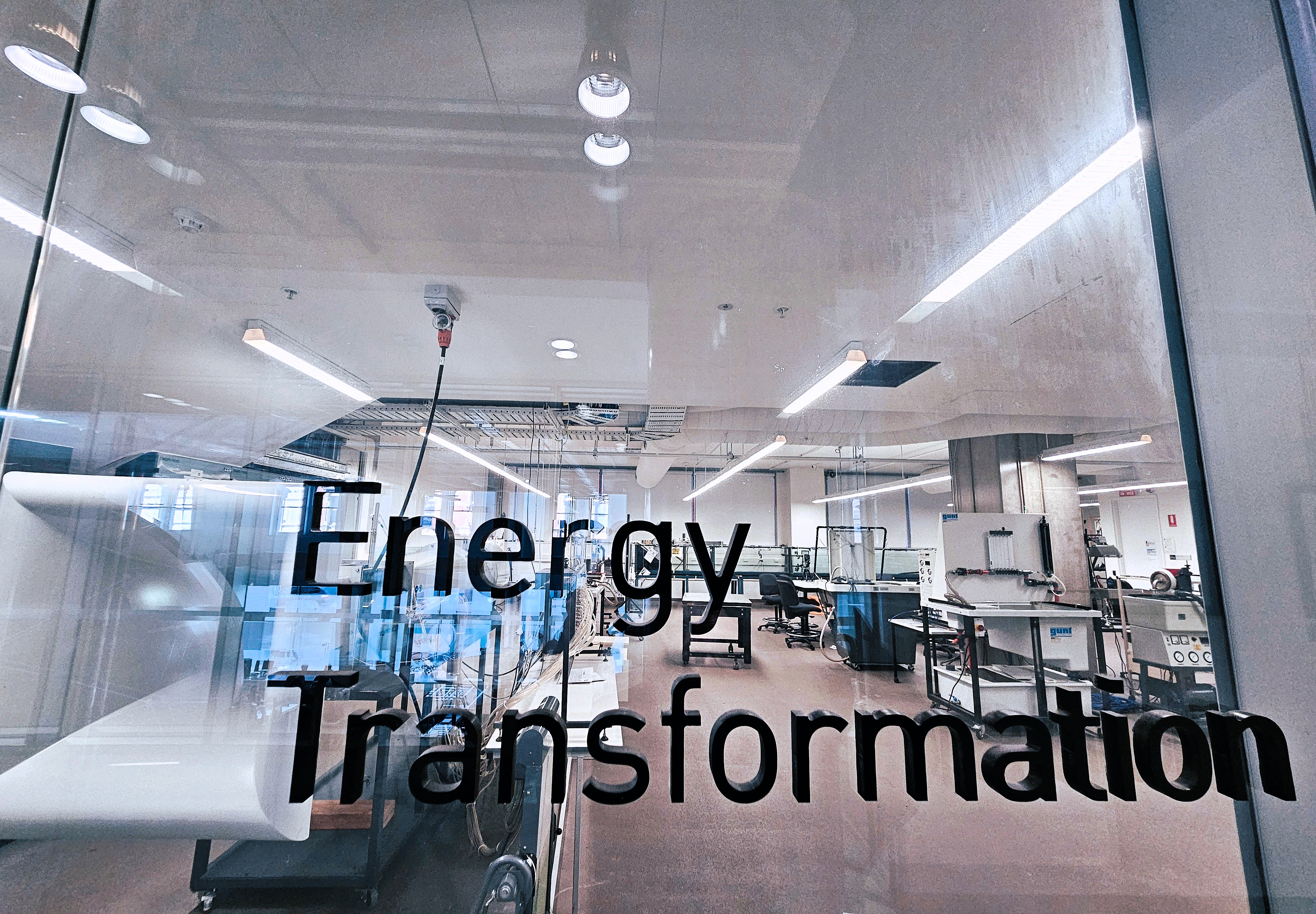
The front of the lab at Swinburne - A glass window pane with the Title Energy Transformation written in black typeset on the window
One of two bubbles and waves equipped Labs at Swinburne . Photo taken after today’s meeting.
Now, with Richard and his colleague Andrew Ooi at the University of Melbourne and their Bubble Clouds in Ocean Waves ARC- supported team, I turn my focus to bubble behaviour in bubble clouds and bubble curtains …

Recipient of ANAT Synapse Residency 2026